CLEARSTEADEXTERIOR CARE Prepare quote brief

Window cleaning planned around glazing, access and building use

Start with the number and position of elevations, then add frames, sills, extensions, public routes and ground conditions. The provider must confirm a suitable work-at-height strategy.

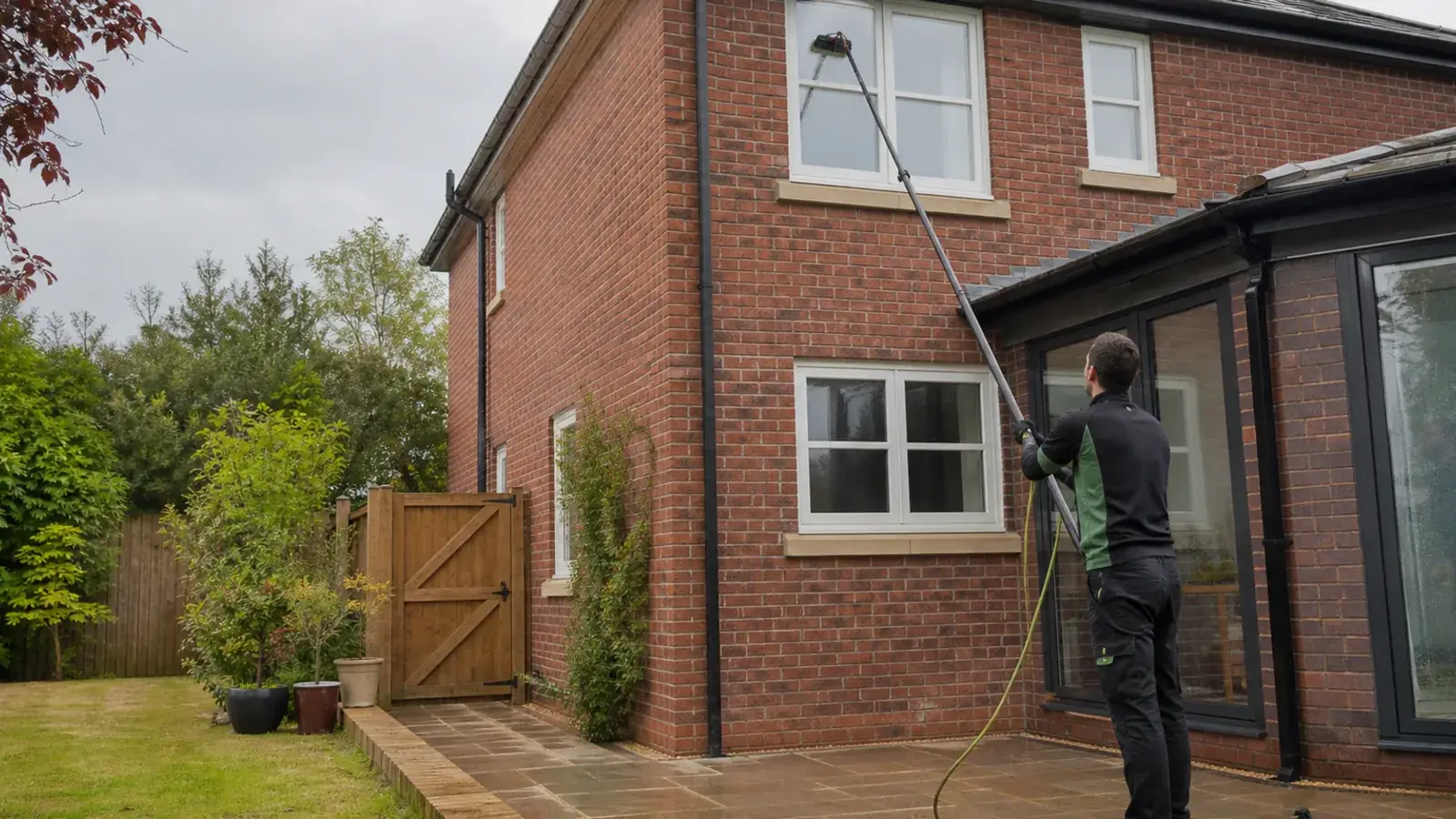
A water-fed pole being used on upper windows of a UK home.
Official starting point

Access strategy

Avoid work at height where reasonably practicable

HSE guidance gives water-fed poles and cleaning from inside as examples of ways to avoid work at height. A provider still needs to assess the building, ground, weather, tools and task before selecting equipment.

  • Map which windows can be reached from safe ground.
  • Identify internal-access possibilities without assuming permission.
  • Leave specialist access decisions to a competent provider.

Residential route

Describe the whole home, not only the front elevation

Rear glazing, side passages, extensions, roof windows and conservatory sections can change time and access. Count elevations and note obstacles so the initial conversation does not rely on a street-view assumption.

  • List front, rear and side glazing.
  • Mention locked gates, pets and narrow access.
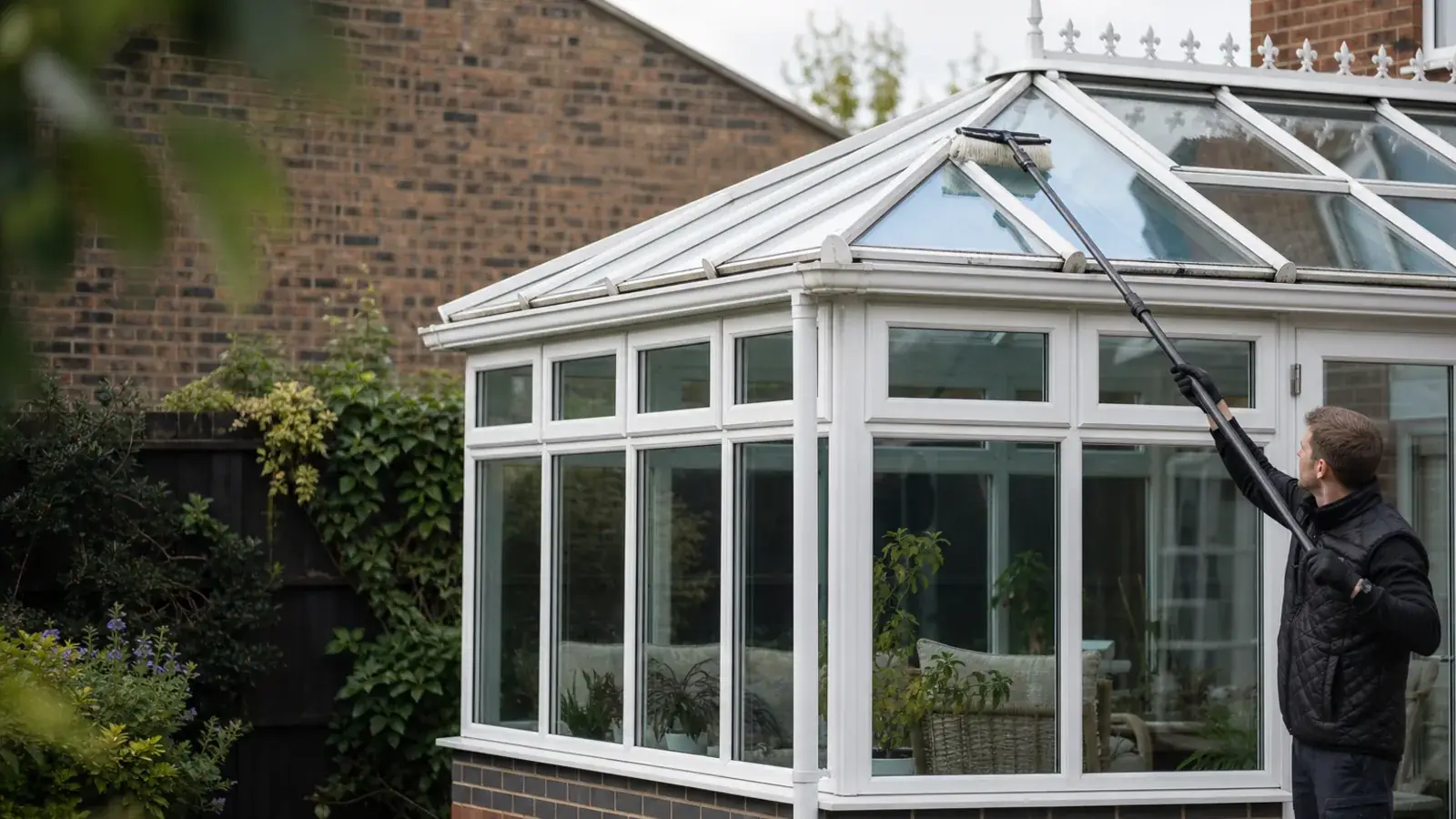
  • Separate windows from conservatory roof panels.
Conservatory roof panels being cleaned with a long-reach pole.
Homes
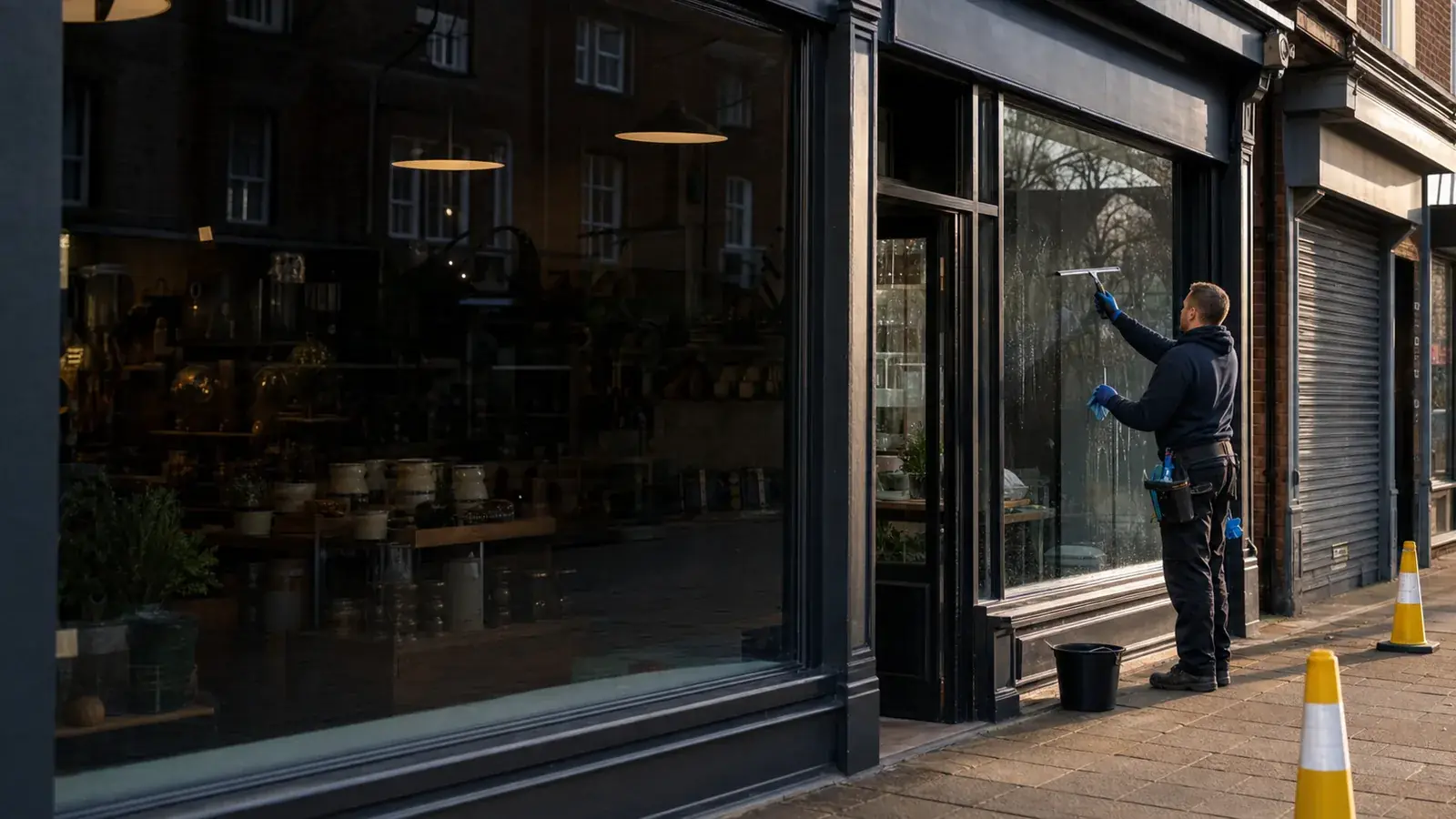
Ground-level shopfront glazing prepared for window cleaning.
Premises

Commercial route

Plan shopfront and premises work around people and operations

Public pavements, entrances, displays, deliveries and opening times create an operational boundary around the glass. A commercial brief should identify work zones and the time windows a provider may assess.

  • Map entrances and public crossing points.
  • Record internal and external faces separately.
  • Ask what access, signage and stakeholder approvals are required.

Scope detail

Confirm panes, frames, sills and doors as separate inclusions

The word windows can hide several expectations. Agree whether the work covers glass only, frame faces, sills, doors, internal panes, screens or conservatory sections, and how pre-existing defects will be recorded.

  • Identify damaged seals, cracked panes or loose trim.
  • State whether access to internal areas is requested.
  • Agree the handover check and any excluded glazing.
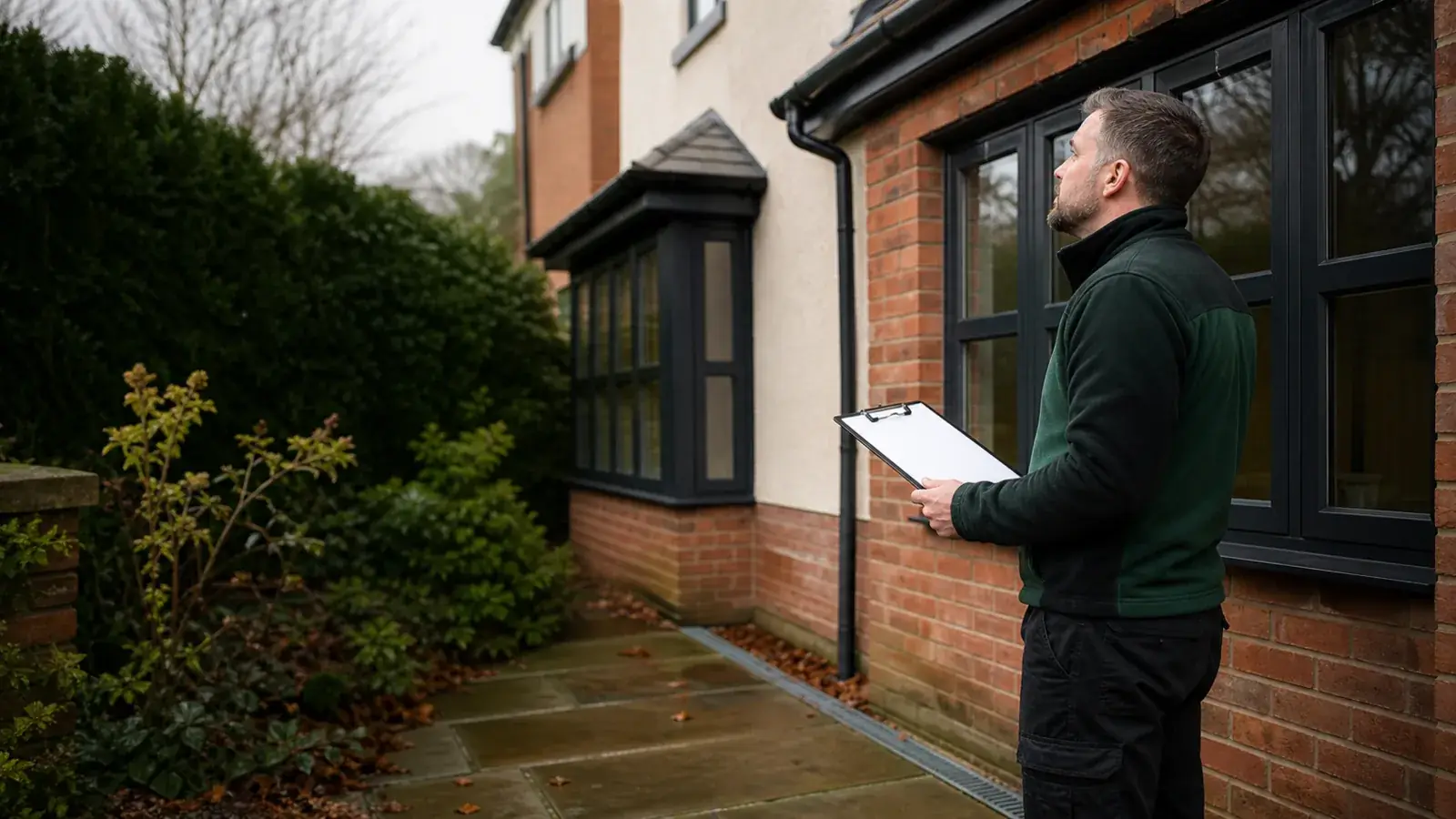
A property exterior being reviewed during a cleaning walkaround.
Inclusions

Questions

Useful answers before the next step

Does window cleaning always require ladders?

No. HSE says work at height should be avoided where reasonably practicable and gives water-fed poles or cleaning from inside as examples. The correct method still depends on a site-specific assessment.

Are frames and sills automatically included?

No. Glass, frames, sills, doors and conservatory sections should be listed separately so the provider can confirm what is included.

Can windows be cleaned in any weather?

No availability or weather rule is claimed here. A competent provider should assess weather, ground conditions, equipment and the specific task before proceeding.

How often should windows be cleaned?

There is no universal interval. Exposure, building use, nearby roads or trees, access, budget and the desired appearance all affect the conversation.

Does Clearstead use water-fed poles?

No equipment ownership or reach is claimed. The imagery and content illustrate a route a real provider could verify before launch.

Next step

Prepare the property details before requesting a quote

Prepare a quote brief