CLEARSTEADEXTERIOR CARE Prepare quote brief

Decking and fence cleaning planned around material and finish

Timber grain, composite boards, coatings, fixings and weathering all affect cleaning. Record what the structure is made from and what finish you hope to discuss before a provider selects a method.

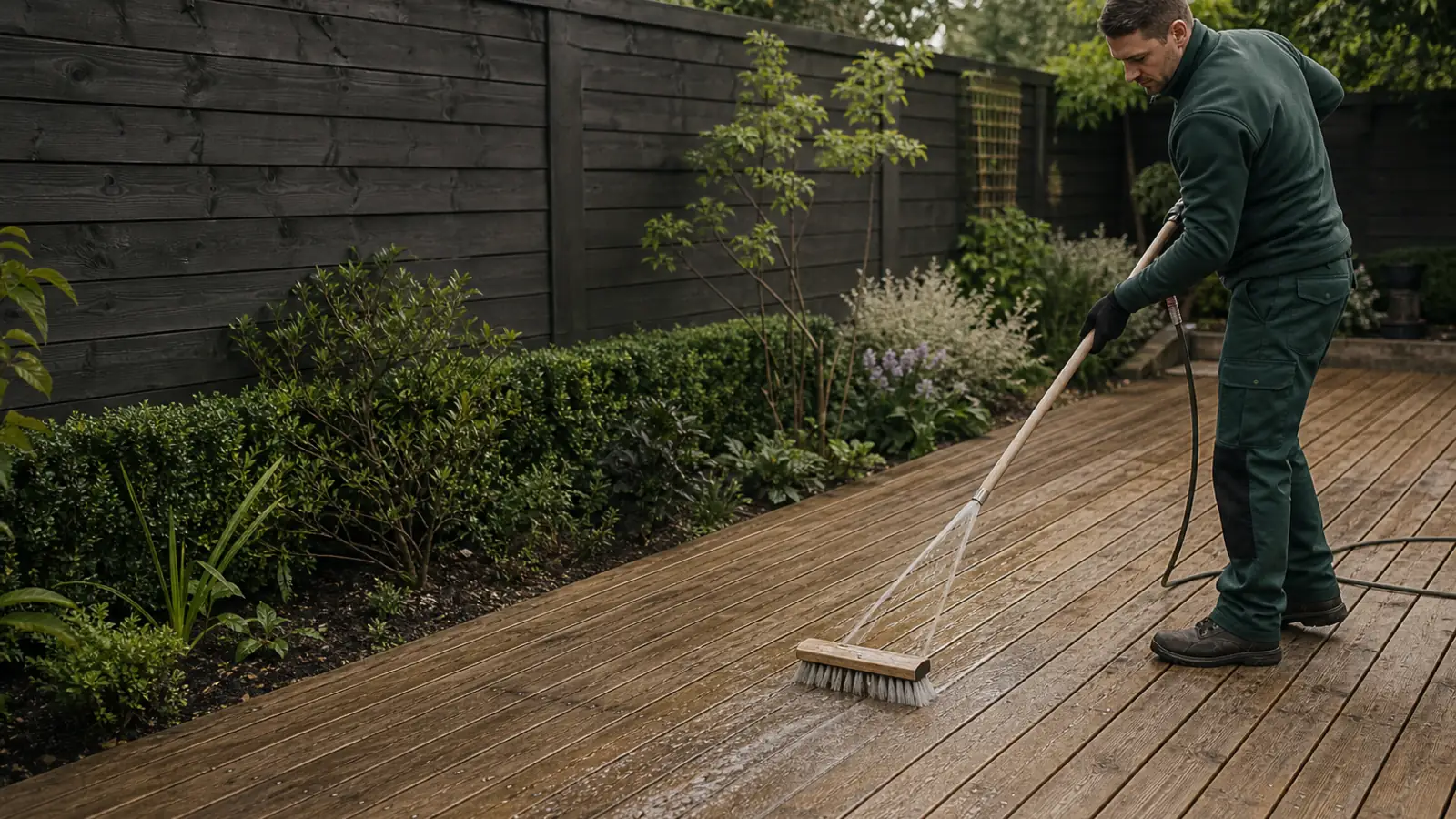
Timber decking being cleaned carefully along the grain.
Material and finish

Method fit

Distinguish timber, composite and coated surfaces

Softwood, hardwood, composite boards, painted fences and stained timber do not share one cleaning response. Manufacturer guidance and existing finishes may limit pressure, products or the direction of work.

  • Photograph board ends, grain and fixings.
  • Name paint, stain, oil or composite system where known.
  • Flag splintering, softness, rot or loose components.

Before cleaning

Inspect structure, gaps and slippery areas before appearance

Decking can hide weakened boards, protruding fixings and poor drainage beneath organic growth. Fences may have loose panels or unstable posts. Cleaning should not conceal the need for repair or safe access decisions.

  • Mark loose boards, rails, panels and raised fixings.
  • Note shaded, persistently wet and slippery areas.
  • Keep structural repair outside a cleaning promise.
A property exterior being reviewed during a cleaning walkaround.
Condition
Garden paving prepared for cleaning with furniture moved clear.
Surroundings

Protect the property

Protect planting, walls and the spaces below raised decking

Water and debris can pass through board gaps or travel into planted borders. Identify stored items, lighting, cables, neighbouring panels and rooms or structures beneath the work area before cleaning begins.

  • Clear or protect the area beneath raised decks.
  • Map planters, ponds, electrics and adjoining walls.
  • Agree how displaced debris and water will be contained.

Scope and handover

Separate cleaning from sanding, repair and refinishing

Cleaning can raise grain, reveal colour variation or expose earlier damage. Sanding, board replacement, staining, oiling and painting are separate decisions that depend on drying and the substrate's condition.

  • Agree whether both faces of fence panels are included.
  • Set expectations for weathering and colour variation.
  • Confirm drying and any separate refinishing route.
Timber decking being cleaned carefully along the grain.
Aftercare boundary

Questions

Useful answers before the next step

Can timber decking be pressure washed?

Sometimes a carefully assessed method may be considered, but timber species, grain, damage and finish matter. Excessive force or poor technique can mark or fibre the surface.

Will cleaning restore the original timber colour?

No exact colour is promised. Weathering, UV exposure, coatings and previous maintenance can produce permanent variation.

Is staining or oiling included?

Not automatically. Cleaning, drying, preparation and refinishing should be separate scope items with compatible products and conditions confirmed.

Can a loose fence be cleaned?

Instability should be raised before cleaning. Repair or exclusion may be needed so cleaning force does not worsen loose panels, posts or fixings.

Does this page promise that the method is suitable?

No. Material, condition, access, drainage and adjacent property need a real assessment. The page helps organise that conversation; it does not replace it.

Can I receive a live quote from Clearstead?

Not from this demonstration. The quote builder creates a browser-only summary and sends nothing. Pricing, service area and availability remain unconfirmed until a real operator is connected.

Next step

Prepare the property details before requesting a quote

Prepare a quote brief