CLEARSTEADEXTERIOR CARE Prepare quote brief

Commercial exterior cleaning structured around sites and operations

A premises may combine paving, frontage, cladding, glazing and loading areas. Divide it into work zones, then add operational, environmental and approval constraints before method or programme is proposed.

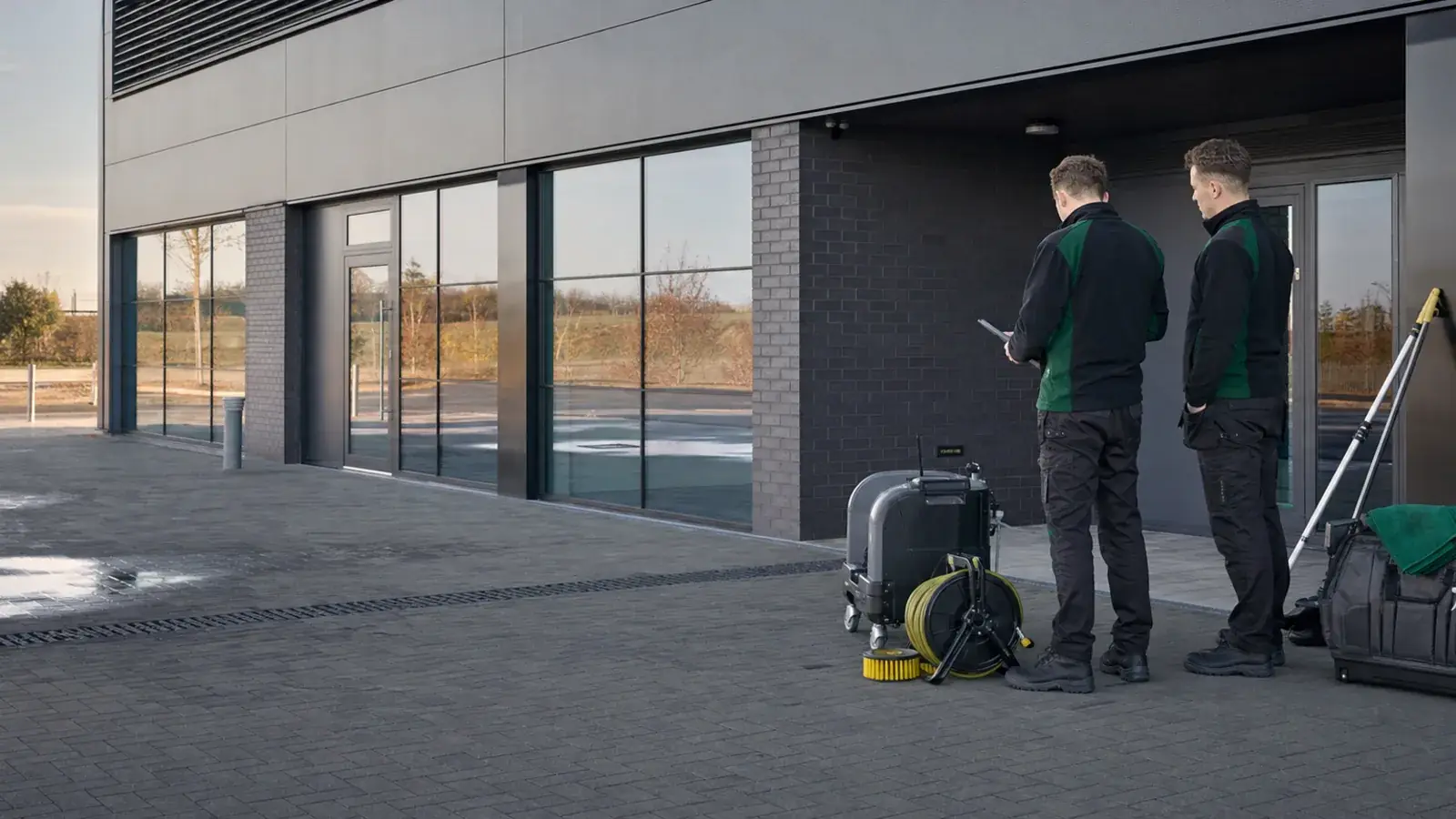
An organised exterior-cleaning setup outside a small commercial premises.
Site schedule

Method fit

Break the site into surfaces and operational zones

Forecourts, paths, entrances, service yards, cladding, render and glazing each need their own material and condition record. A zone schedule helps stakeholders compare scope without applying one method across the entire site.

  • Name each surface and approximate work area.
  • Map entrances, deliveries, fire routes and public interfaces.
  • Flag coatings, defects and sensitive equipment.

Before cleaning

Align access, competence and documentation with the real task

The provider should assess height, equipment, people, vehicle movement and site rules before work. Any requested insurance, risk assessment, method statement, induction or permit belongs in the approval stage, not in unsupported marketing copy.

  • List client document requirements.
  • Identify vehicle, customer and staff interfaces.
  • Verify operator evidence before awarding work.
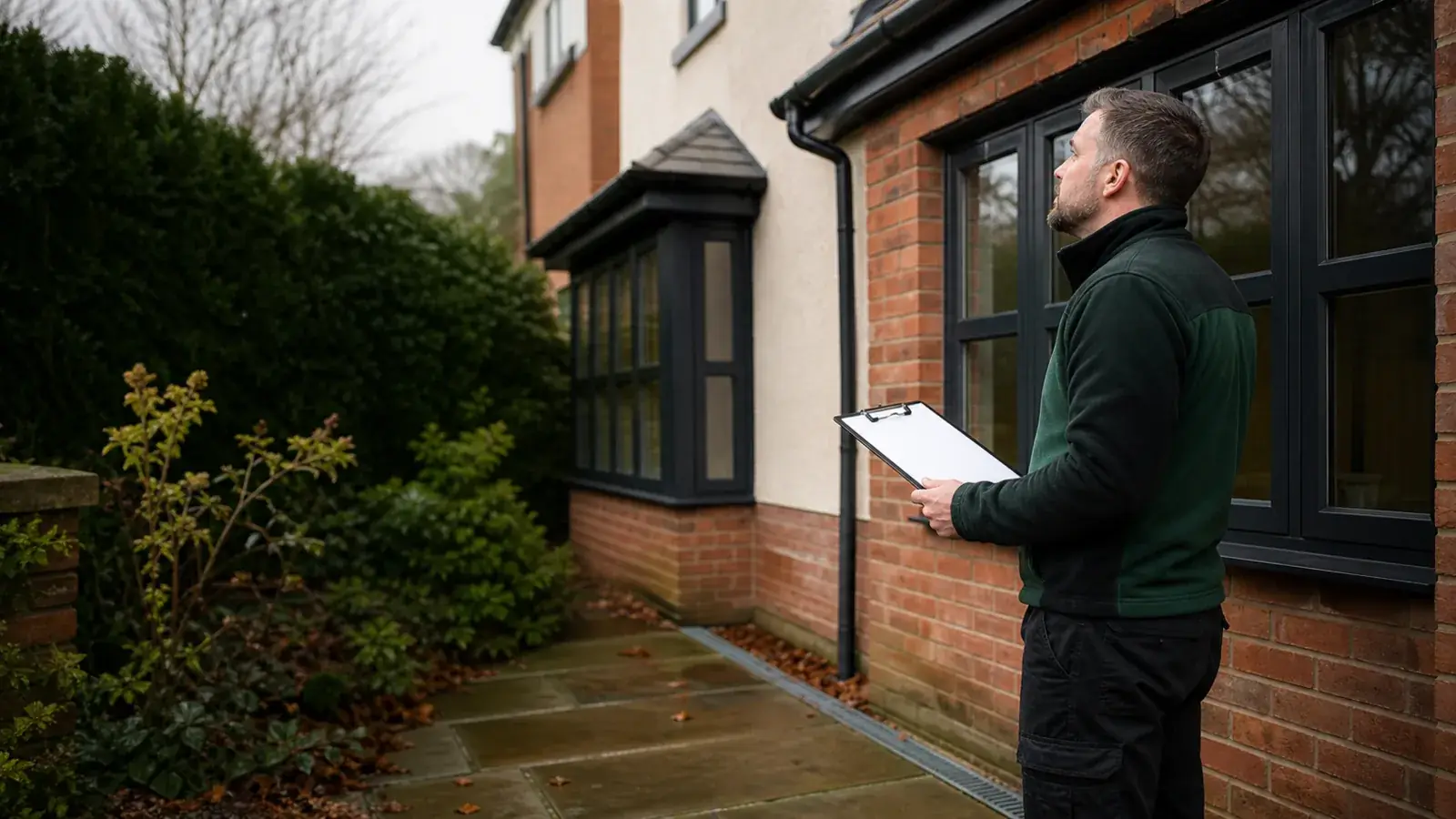
A property exterior being reviewed during a cleaning walkaround.
Approval boundary
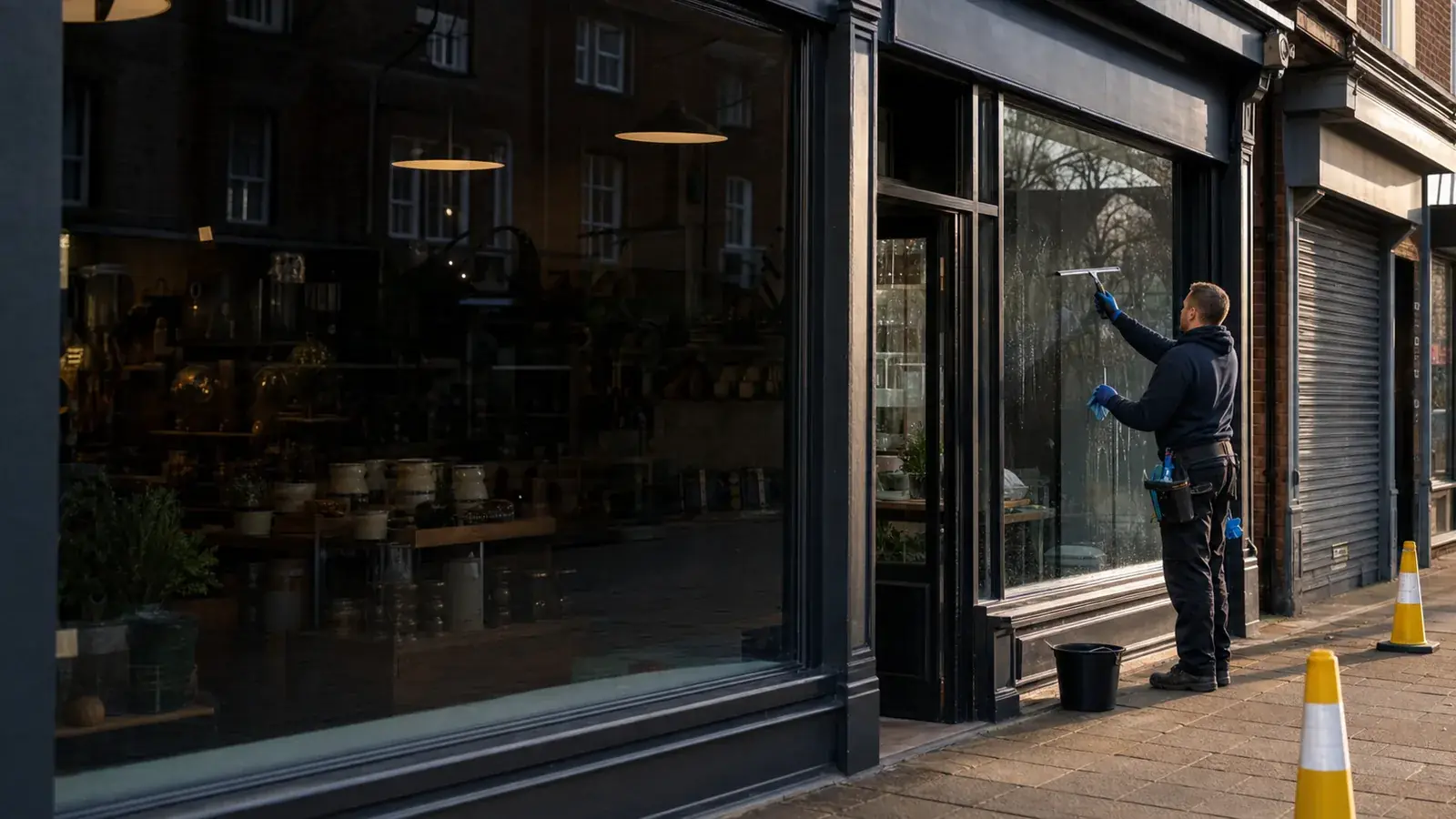
Ground-level shopfront glazing prepared for window cleaning.
Environmental plan

Protect the property

Control runoff, waste, stock and neighbouring operations

Commercial cleaning may move sediment or residues across drainage and operational boundaries. Current GOV.UK guidance says contaminated water must not cause pollution, so the site needs a suitable water and waste plan.

  • Map drains and confirm where they lead.
  • Identify stock, displays, vehicles and adjacent occupiers.
  • Ask how debris, contaminated water and interruptions are controlled.

Scope and handover

Agree programme, exclusions and handover evidence

One-off cleaning, phased works and recurring maintenance require different schedules. Confirm zones, sequence, access windows, exclusions, issue escalation and the evidence needed to approve completion.

  • Separate mobilisation and optional treatment costs.
  • Record inaccessible or deferred zones.
  • Define photographs, sign-off and issue reporting.
An organised exterior-cleaning setup outside a small commercial premises.
Commercial scope

Questions

Useful answers before the next step

Can Clearstead provide commercial credentials?

No. This is a fictional demonstration. Insurance, competence, accreditations, policies and client references must be supplied and verified by a real operator.

Can work happen outside trading hours?

No availability is claimed. The brief can record preferred windows, but the operator must confirm staffing, access, lighting, noise and site rules.

Does commercial cleaning include waste-water disposal?

A provider must define the plan for the specific site. GOV.UK guidance says contaminated water must not cause pollution and permissions may apply to some disposal routes.

Can several buildings be covered by one quote?

They can be presented in one enquiry, but each building and work zone should remain separately measurable and reviewable.

Does this page promise that the method is suitable?

No. Material, condition, access, drainage and adjacent property need a real assessment. The page helps organise that conversation; it does not replace it.

Can I receive a live quote from Clearstead?

Not from this demonstration. The quote builder creates a browser-only summary and sends nothing. Pricing, service area and availability remain unconfirmed until a real operator is connected.

Next step

Prepare the property details before requesting a quote

Prepare a quote brief