CLEARSTEADEXTERIOR CARE Prepare quote brief

How an exterior-cleaning enquiry becomes an agreed scope

The useful sequence is brief, assess, agree, prepare, clean and hand over. Each stage keeps facts and decisions visible before a real provider makes promises about method, timing or price.

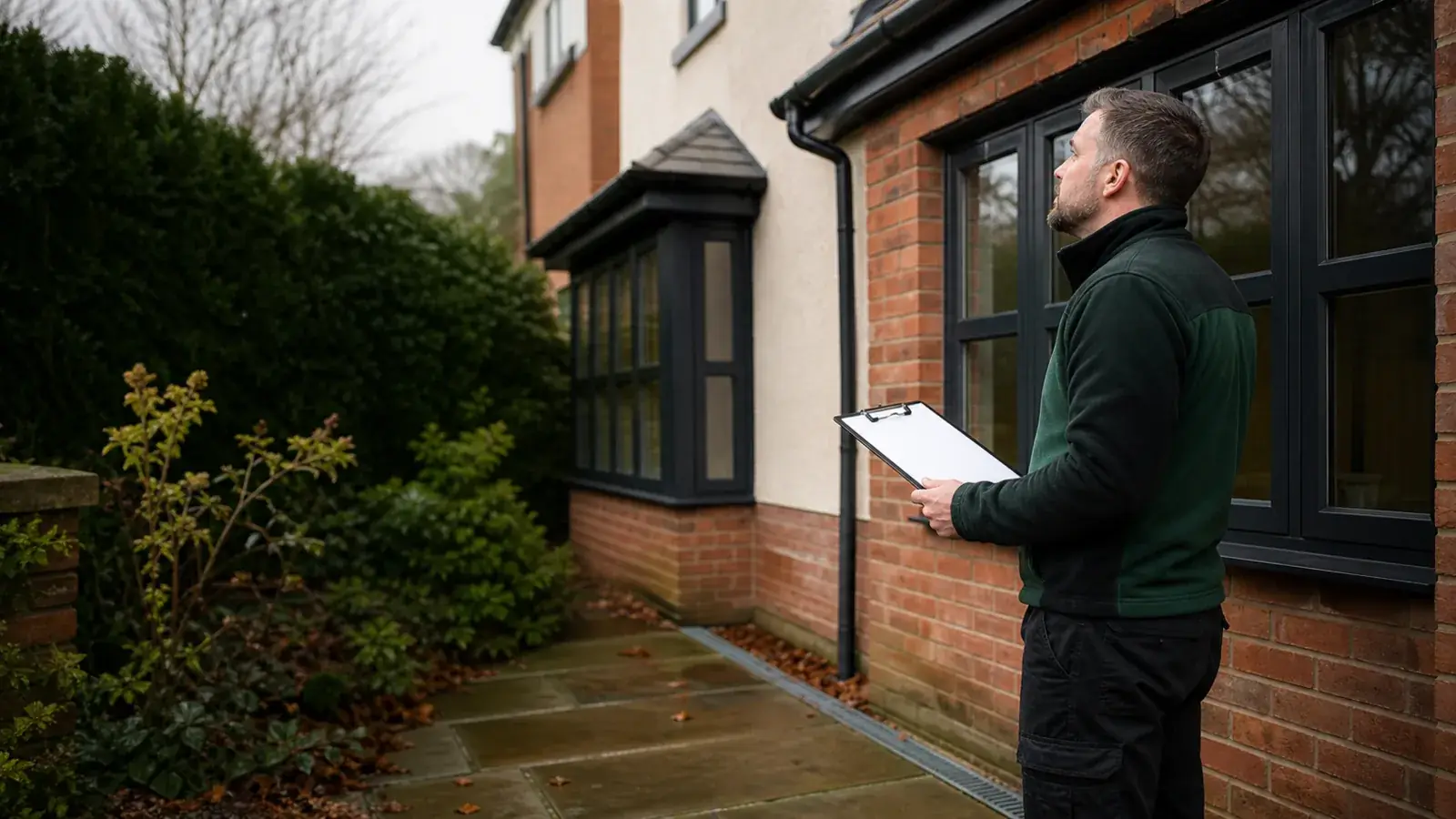
A property exterior being reviewed during a cleaning walkaround.
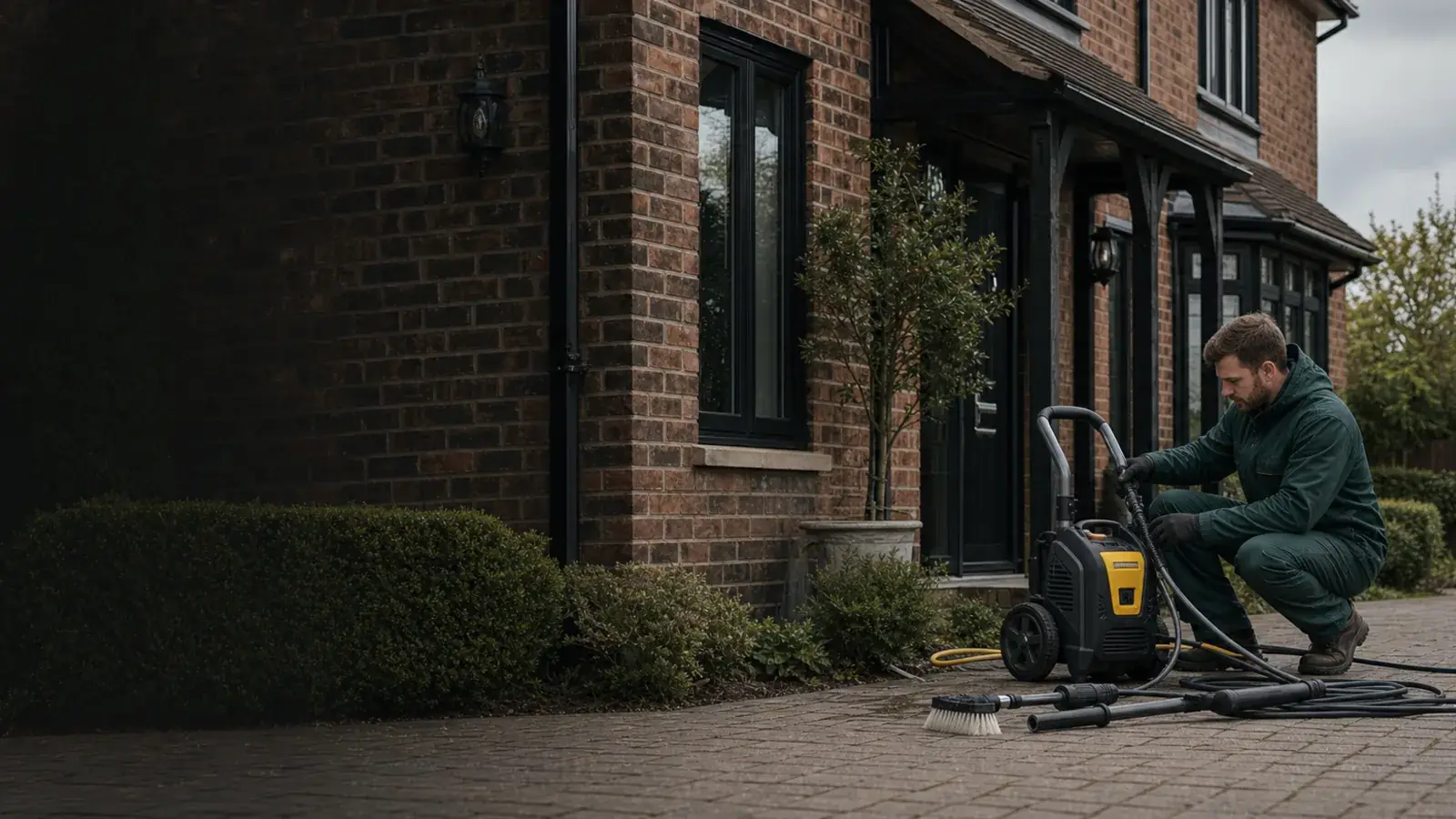
Exterior-cleaning equipment being prepared beside a well-kept UK home.
Browser-only

01 / Brief

Start with the property and the result to discuss

Choose the closest service and record material, approximate area, condition, access, water, drainage and surrounding property. The brief should describe observations without pretending to be a diagnosis or method statement.

  • Select a surface or building-detail route.
  • Add safe photographs and measurable facts.
  • Keep personal and security data out of the demo.

02 / Assess

Let the real provider test assumptions about suitability

The provider should review material, defects, access, equipment, products, water and runoff. Remote information may help triage, but it may not be enough to confirm a method or final price.

  • Separate known facts from items needing inspection.
  • Identify test areas or exclusions where appropriate.
  • Verify competence and documents needed for the task.
A property exterior being reviewed during a cleaning walkaround.
Assessment
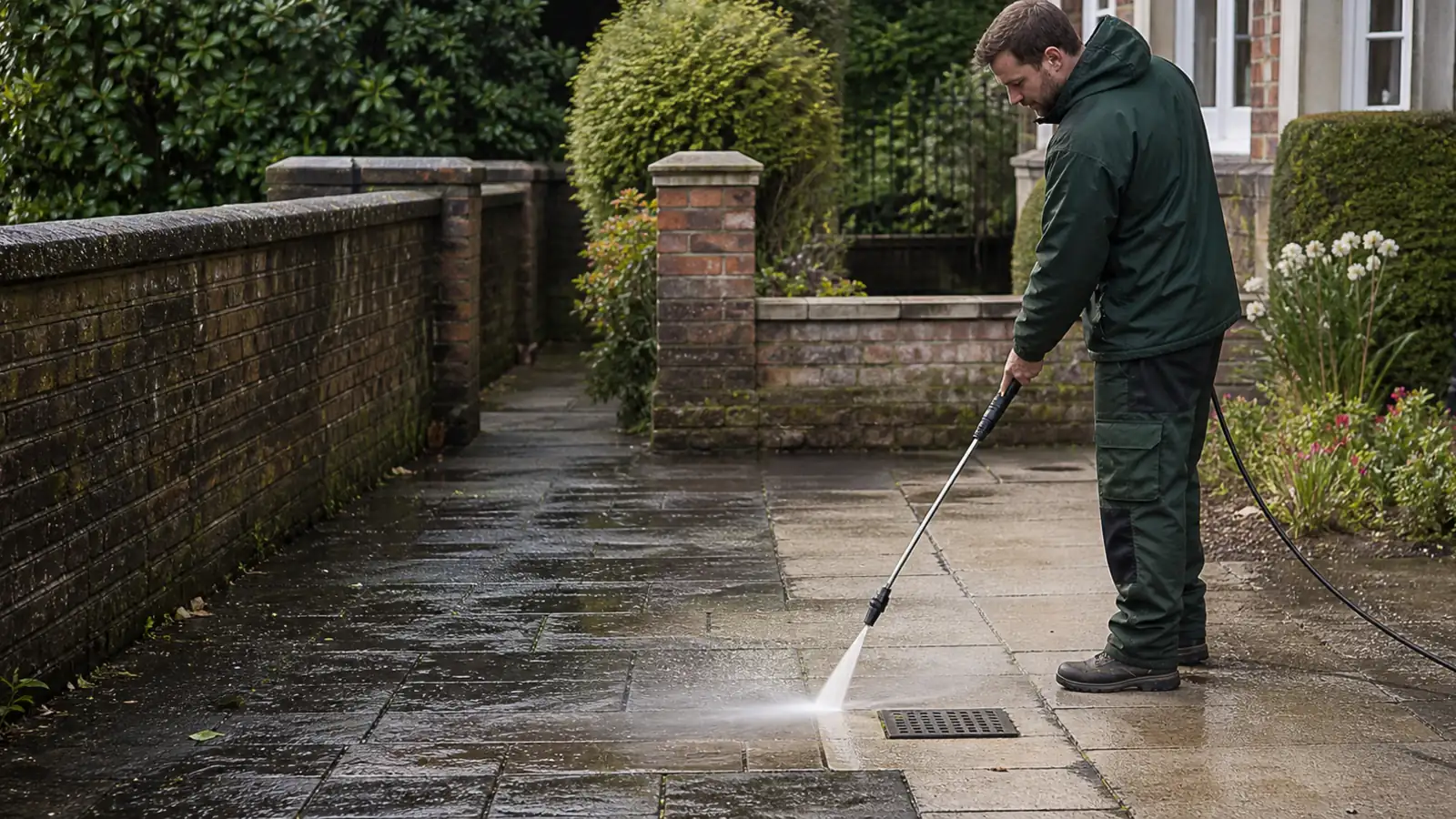
Controlled pressure washing across a section of stone paving.
Scope before work

03 / Agree

Confirm inclusions, exclusions, price basis and timing

An agreed scope should name the work areas, core method assumptions, optional treatments, access responsibilities, runoff controls and realistic finish. It should also explain what could change after inspection.

  • List each surface and building face.
  • Separate cleaning from repair and aftercare.
  • Record price assumptions and change approval.

04 / Prepare

Make the work area available without creating new risks

Close windows, secure pets and move only the items agreed with the provider. Keep routes, drains, fragile materials and neighbouring areas visible, and do not improvise access equipment for the provider.

  • Confirm arrival and access arrangements privately.
  • Protect or move agreed loose items.
  • Keep people clear of the working area.
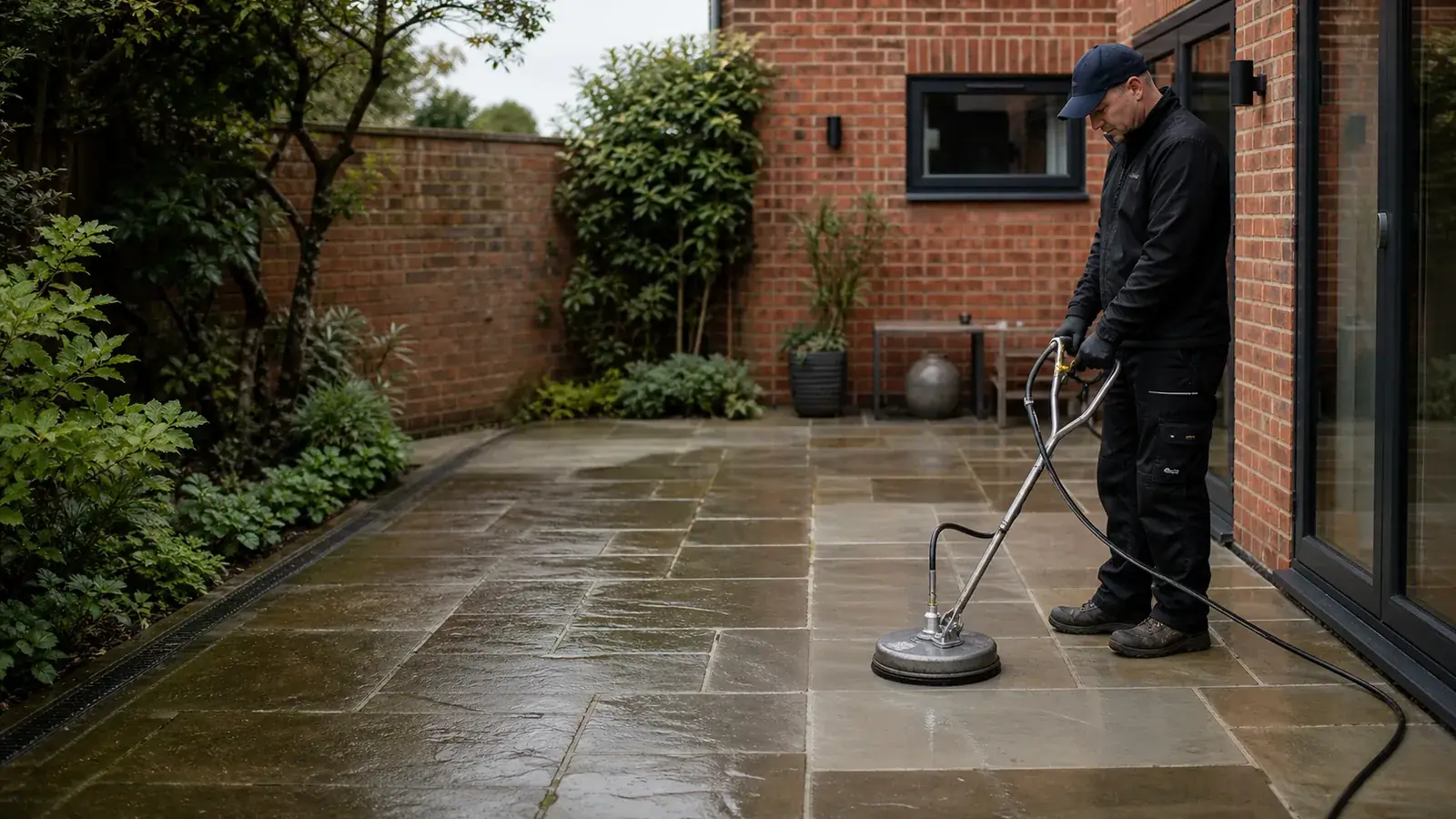
Garden paving prepared for cleaning with furniture moved clear.
Property ready
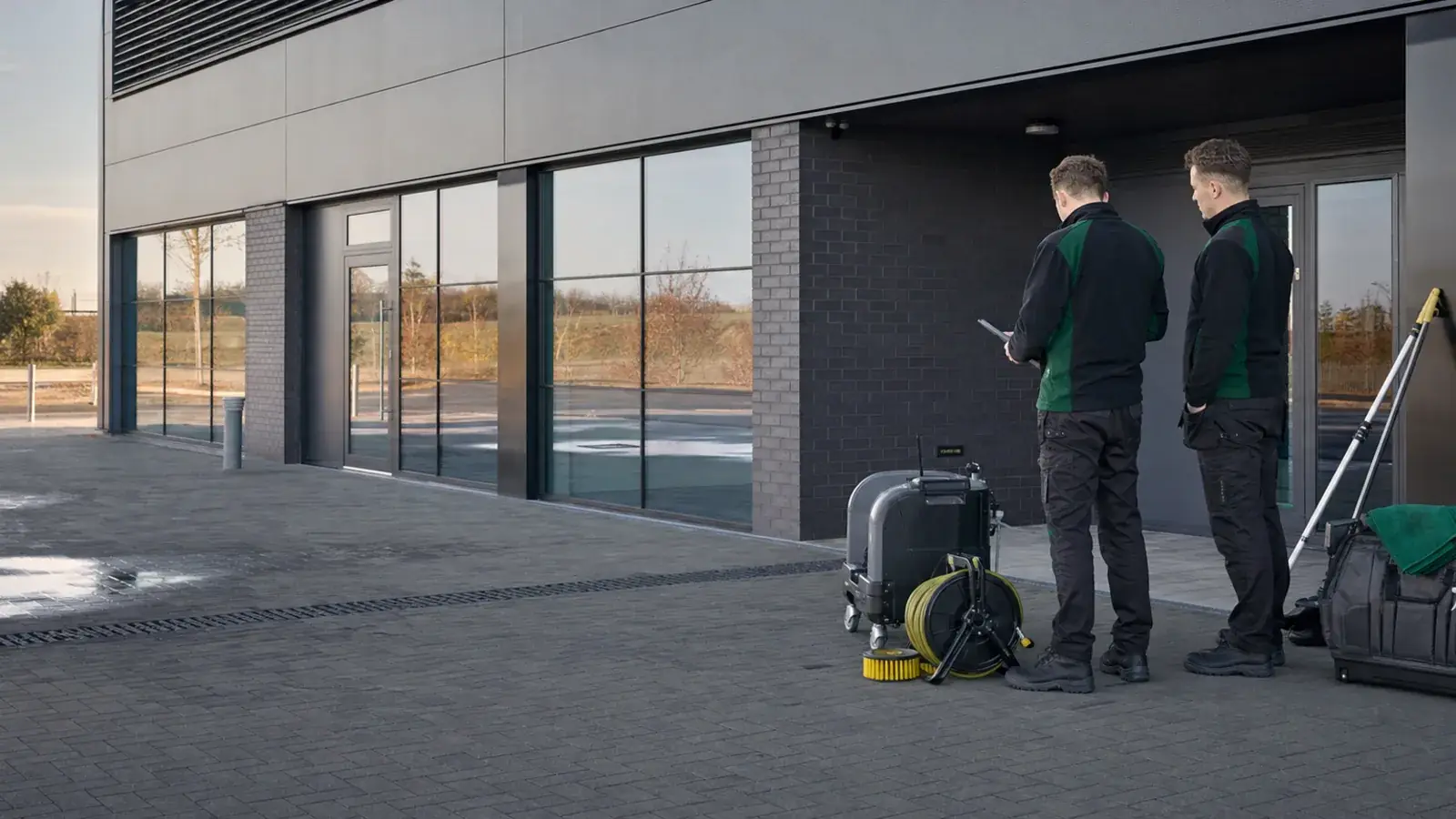
An organised exterior-cleaning setup outside a small commercial premises.
Completion record

05 / Handover

Review completed, excluded and changed areas together

The final check should record what was cleaned, what remained inaccessible, pre-existing defects, persistent marks and any aftercare or drying information. Recurring work should only be scheduled after the first scope is understood.

  • Compare work with the agreed zone list.
  • Record exclusions and newly visible defects.
  • Confirm aftercare without inventing guarantees.

Questions

Useful answers before the next step

Can a quote be final from photographs alone?

Sometimes a provider may be able to price from suitable information, but access, material uncertainty or hidden condition may require inspection. The quote should state its assumptions.

When should a test area be used?

That is a provider decision based on material, condition, finish and method. A test area can reduce uncertainty but cannot guarantee the result across every part of a surface.

What happens if new defects appear after cleaning?

Cleaning can reveal cracks, failed joints, colour variation or earlier repairs. The handover should distinguish pre-existing condition from the cleaning scope and route repairs separately.

Does the quote builder send an enquiry?

No. It builds a copyable summary on your device and sends nothing.

When can recurring cleaning be agreed?

After the real operator confirms service, frequency, access, price and terms. This demo does not create a recurring arrangement.

Next step

Prepare the property details before requesting a quote

Prepare a quote brief