CLEARSTEADEXTERIOR CARE Prepare quote brief

Gutter clearing prepared from flow symptoms and access

Start with what happens in rain and where it happens. Gutter debris, downpipe restriction, defects and roofline damage can look similar from ground level, so avoid diagnosing the cause from one photograph.

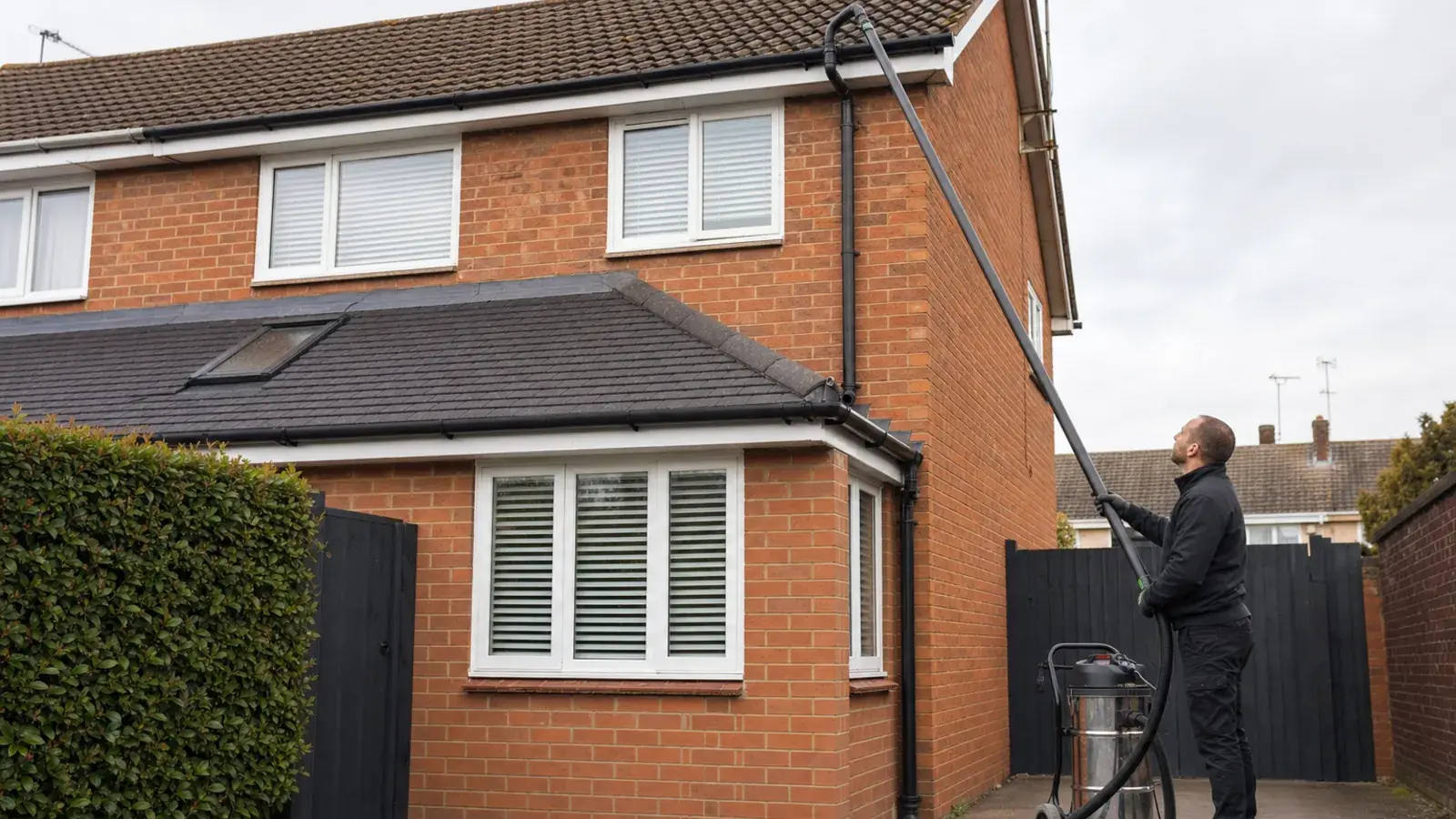
A ground-operated vacuum pole positioned beneath a domestic gutter line.
Flow symptoms

Method fit

Describe the flow problem before choosing a clearing route

Note whether water spills over a particular edge, appears behind the gutter, runs down a wall or fails to leave a downpipe. Visible growth or debris may be relevant, but it does not prove the only blockage point.

  • Record front, rear, side and extension locations.
  • Note the weather conditions when overflow appears.
  • Separate gutter contents from possible defects or leaks.

Before cleaning

Map roofline height, gutter shape and ground access

Extensions, conservatories, narrow passages, sloping ground and shared alleys can affect ground-operated or other access methods. HSE says work at height must be planned and suitable equipment selected by competent people.

  • Photograph whole elevations from safe ground.
  • Identify extensions and structures below gutters.
  • Do not climb or lean out to obtain enquiry photos.
A property exterior being reviewed during a cleaning walkaround.
Ground-first assessment
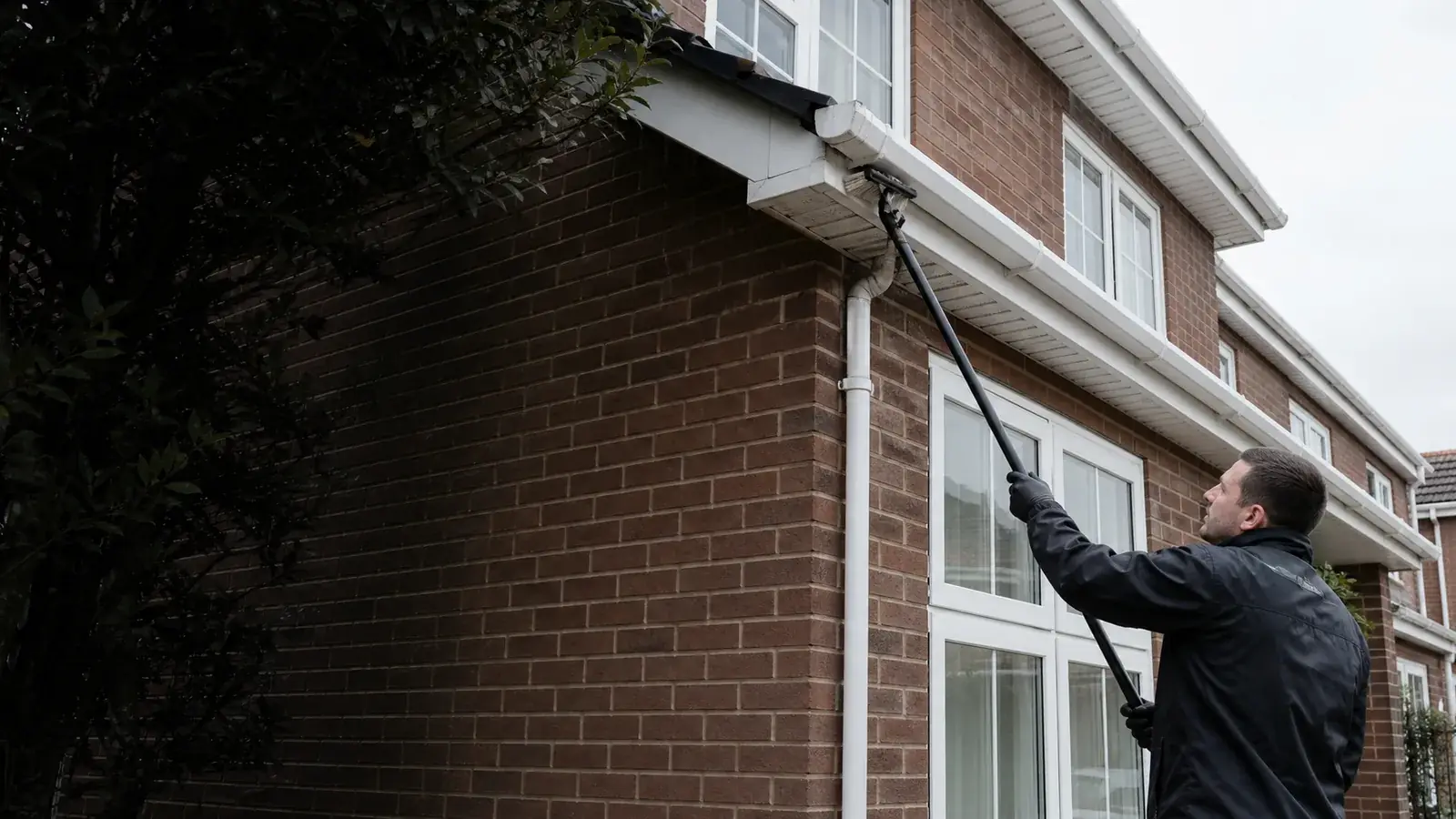
White fascia and soffit details being inspected from ground level.
Debris and water

Protect the property

Plan for debris, outlets, water testing and neighbouring areas

Cleared material needs containment and disposal, while any flow check should avoid flooding walls, paths or neighbouring property. Note rainwater harvesting, water butts, shared downpipes and planted areas.

  • Flag water butts and connected harvesting systems.
  • Identify shared outlets and neighbouring boundaries.
  • Ask how removed material and flow checks are handled.

Scope and handover

Separate clearing from repairs and proof of condition

A clearing scope should say which gutter runs and outlets are included, what visual or camera evidence is provided and what happens if damage, a sealed downpipe or inaccessible sections are found. Repairs remain a separate service unless confirmed.

  • List included gutter runs and downpipe entries.
  • Ask how inaccessible areas are reported.
  • Keep repair, replacement and leak diagnosis outside the clearing promise.
A ground-operated vacuum pole positioned beneath a domestic gutter line.
Clearing boundary

Questions

Useful answers before the next step

Does gutter clearing include gutter repairs?

No. Clearing debris is different from repairing joints, falls, brackets, outlets, downpipes or roofline defects. A real provider should state its repair boundary.

Can I tell from the ground that a downpipe is blocked?

Overflow and staining are clues, not a complete diagnosis. The restriction could be elsewhere or the guttering may have a defect.

Should I climb up to take photographs?

No. Take only photographs that can be obtained safely from the ground or a normal indoor position. Leave height and equipment decisions to the provider.

Is a camera inspection included?

Not automatically. Ask what evidence the provider can supply and whether it covers all accessible runs and outlets.

Does this page promise that the method is suitable?

No. Material, condition, access, drainage and adjacent property need a real assessment. The page helps organise that conversation; it does not replace it.

Can I receive a live quote from Clearstead?

Not from this demonstration. The quote builder creates a browser-only summary and sends nothing. Pricing, service area and availability remain unconfirmed until a real operator is connected.

Next step

Prepare the property details before requesting a quote

Prepare a quote brief