CLEARSTEADEXTERIOR CARE Prepare quote brief

Pressure washing that starts with the surface and its limits

Pressure washing can be one part of exterior care, but suitability cannot be inferred from dirt alone. Start with material, construction, condition, coatings and where the water will go.

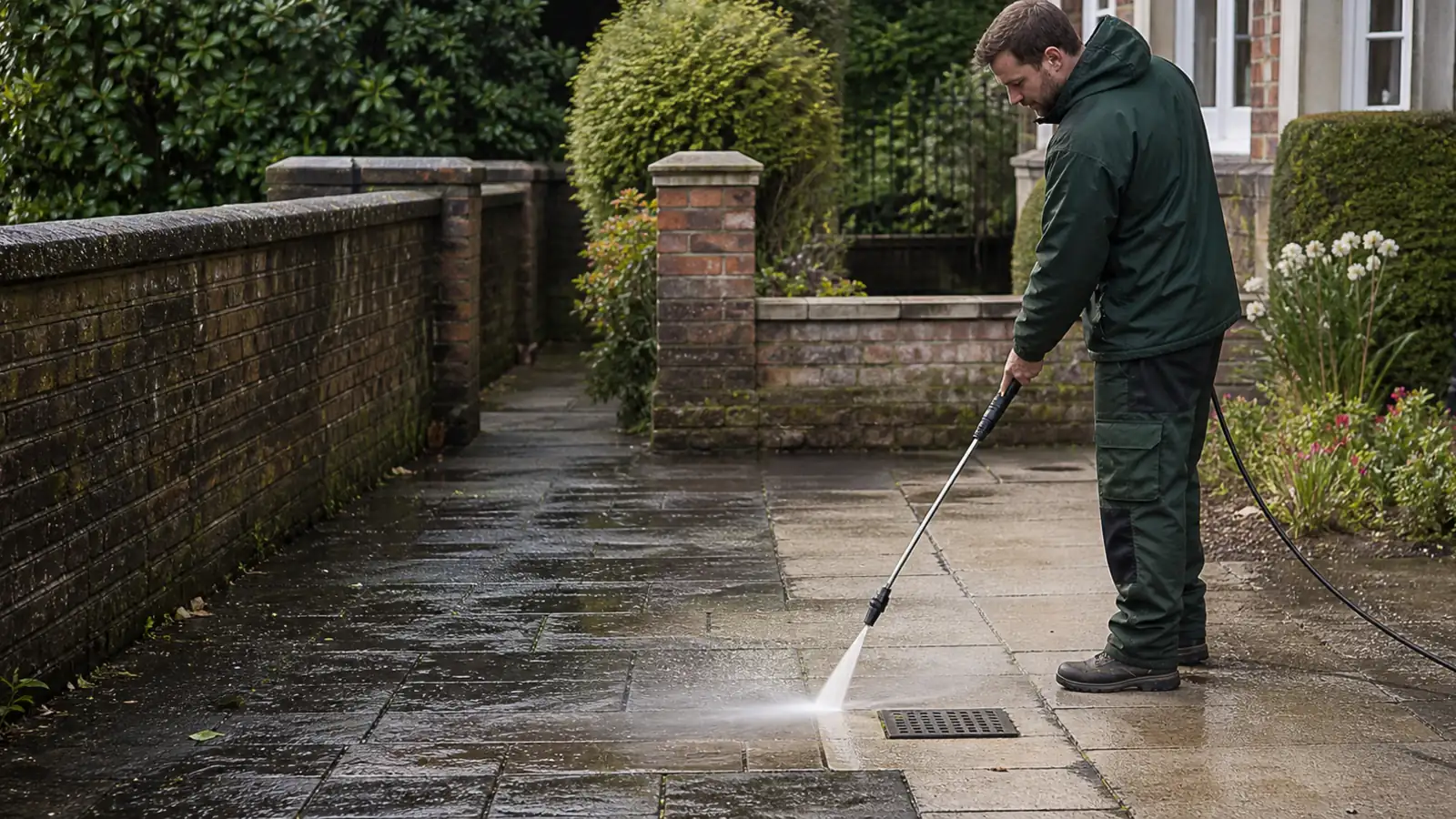
Controlled pressure washing across a section of stone paving.
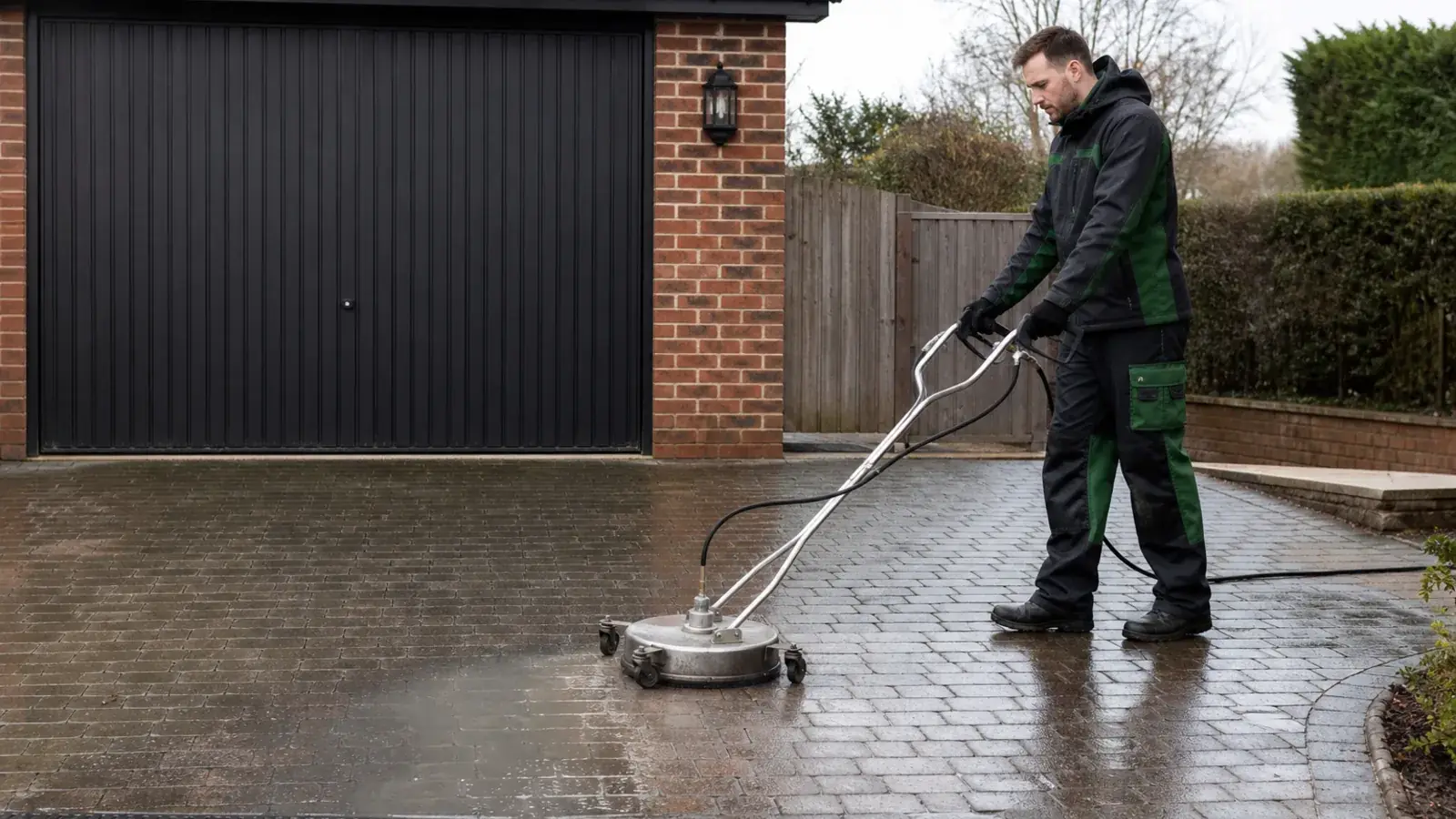
A block-paved driveway being cleaned in measured sections.
Material first

Suitability

Identify the construction before choosing cleaning force

Block paving, concrete, natural stone, porcelain, brick and coated surfaces do not share one pressure setting or cleaning sequence. A real assessment should identify the material, defects and any manufacturer or installer constraints.

  • Record material and approximate age.
  • Flag movement, cracks, loose pointing and hollow areas.
  • Mention sealants, paint or previous treatments.

Method limits

Keep render, timber and delicate edges out of a generic pressure promise

A surface that looks robust from a distance may have vulnerable joints, soft areas or adjoining finishes. Render and timber deserve their own method conversation, while thresholds, vents and electrical fittings need deliberate protection.

  • Separate robust ground surfaces from walls and joinery.
  • Use test areas only where the provider judges them suitable.
  • Agree exclusions before cleaning begins.
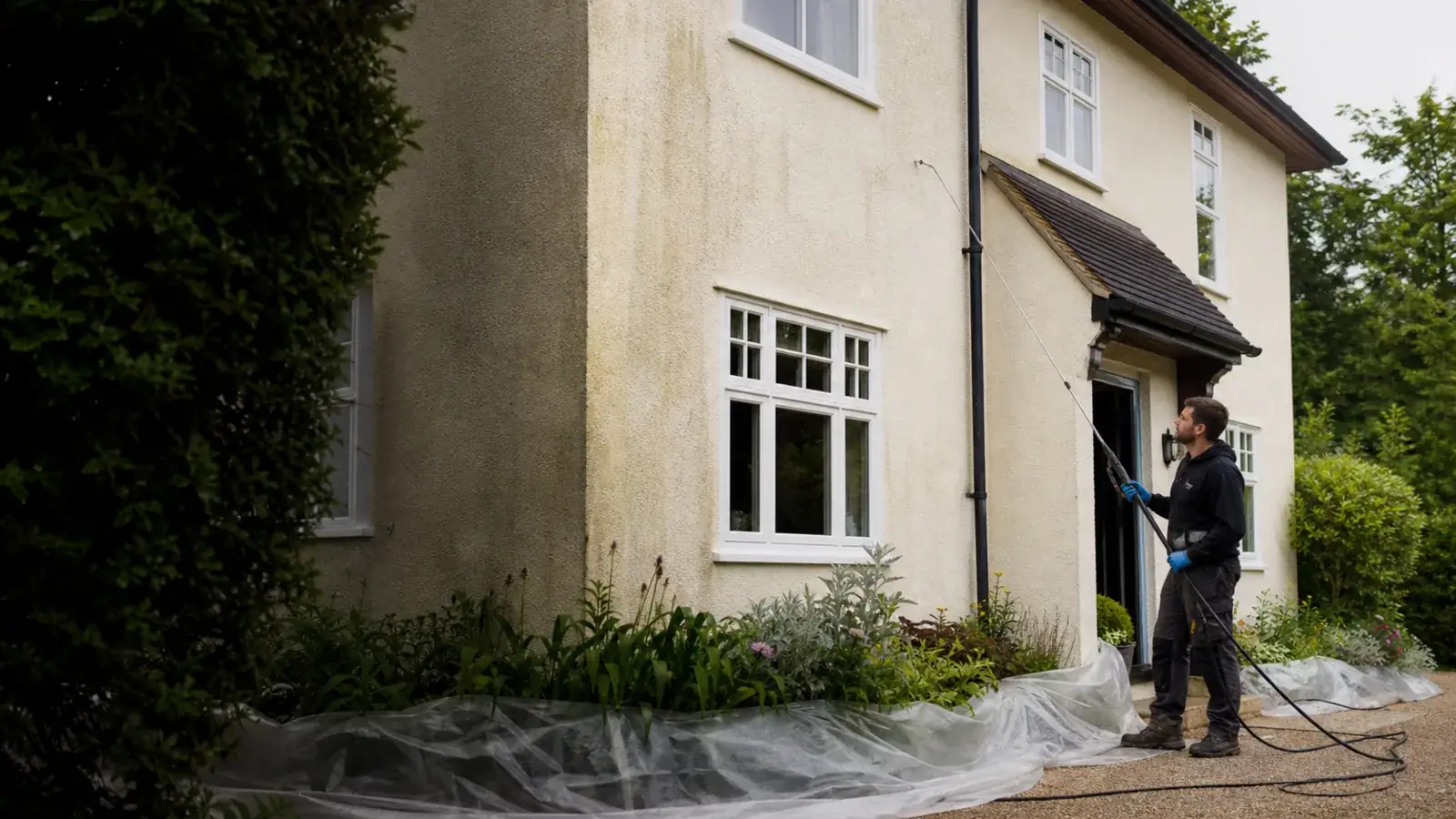
A rendered house elevation being inspected before low-pressure cleaning.
Avoid assumptions
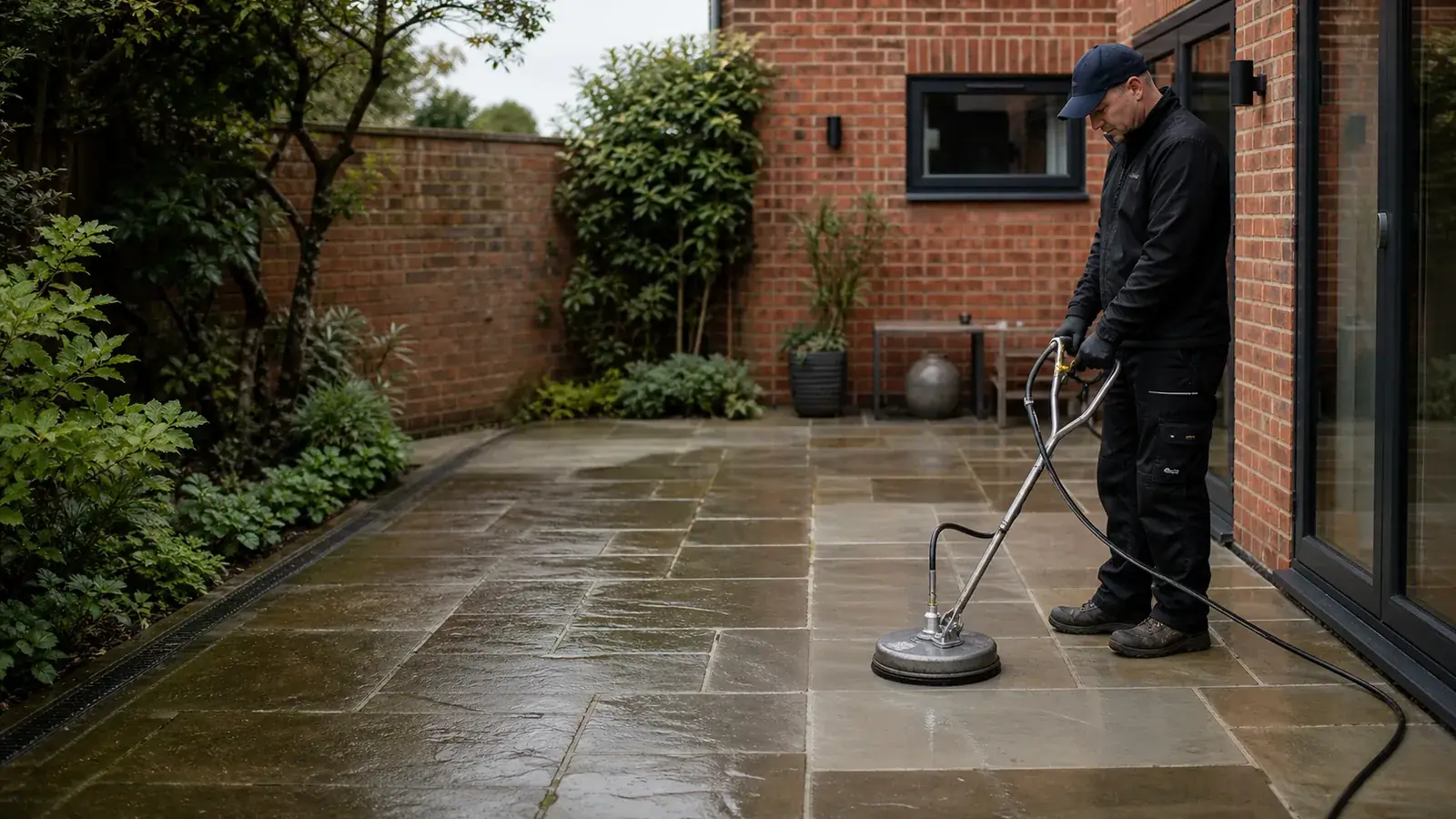
Garden paving prepared for cleaning with furniture moved clear.
Drainage

Runoff

Plan the water route before the cleaning route

Water can carry sediment, organic matter and cleaning residues. Map surface drains, soakaways, foul or combined connections, garden borders and neighbouring land before the provider chooses controls or a disposal route.

  • Only clean water should enter surface-water drains or soakaways.
  • Ask how solids and contaminated water will be controlled.
  • Raise sloping sites and shared drainage early.

After cleaning

Define what clean means and what happens to joints or coatings

A useful quote distinguishes washing from optional re-sanding, sealing, treatment or repair. It should also state which stains may remain, what drying period matters and who is responsible for moving items or restoring access.

  • Separate core cleaning from optional aftercare.
  • Agree realistic stain and colour expectations.
  • Record the handover check and any areas not treated.
Controlled pressure washing across a section of stone paving.
Scope

Questions

Useful answers before the next step

Is pressure washing suitable for every patio or driveway?

No. Material, condition, joints, coatings, edges and drainage need assessment. Lower force, another method or an exclusion may be more appropriate for some areas.

Does pressure washing include re-sanding?

Not automatically. Joint re-sanding, sealing and treatment are separate scope items that a real provider should describe, price and schedule explicitly.

Can pressure washing remove oil or rust marks?

No universal result can be promised. Stain type, age, depth, surface porosity and previous attempts affect what may be practical without damaging the substrate.

Where should the wash water go?

The route depends on what the water contains and the site drainage. Current GOV.UK guidance says contaminated water must not cause pollution and only clean water should enter surface drains or soakaways.

Can I use this page as a method statement?

No. It is general enquiry-preparation content, not a site-specific risk assessment, method statement or environmental plan.

Next step

Prepare the property details before requesting a quote

Prepare a quote brief